24V Adapter Current Guide: 0.5A, 0.65A, 1A or 1.5A?
24V Adapter Output Current Comparison: 0.5A vs 0.65A vs 1A vs 1.5A
On a 24 V adapter, current is the specification that actually decides the purchase. The 0.5 A tier delivers 12 W, 0.65 A delivers 15.6 W, 1 A delivers 24 W and 1.5 A delivers 36 W. Choose the lowest tier whose continuous rating sits comfortably above your device's measured maximum draw, then let plug type and colour availability separate the SKUs that remain — in this range the 0.5 A version is offered with an EU plug, the 0.65 A SK01T with a Korea-type AC plug, the 1 A model with a KR plug, and the 1.5 A SK03T with KR, UK or EU plugs.
This guide is written for buyers who are already past the discovery stage and need to commit to one SKU. It compares the four 24 V current tiers on power, protection, compliance and plug availability, explains when 24 W is enough and when 36 W is not optional, and sets out a six-step selection sequence that can be repeated for any 24 V AC-DC power adapter project. All power figures shown are calculated as voltage multiplied by current, and all documented specifications come from the manufacturer's published data for the SK01T and SK03T models.
Why the 24 V Label Does Not Tell You Which Adapter to Buy
A 24 V rating only fixes the voltage. It says nothing about how much current the unit can sustain, how much power that adds up to, which plug it carries or which safety certificate it holds. Four adapters can all be labelled 24 V and still be entirely non-interchangeable: a 12 W unit and a 36 W unit differ by a factor of three in delivered power, and a Korea-type AC plug will not enter a UK or EU wall socket at all.
Two specific failure modes appear repeatedly in 24 V procurement.
Under-sizing. A buyer reads the device's nominal consumption, sees 0.6 A, and orders the 0.5 A tier because it is the lowest-cost 24 V option. The adapter then runs at or above its ceiling during start-up inrush, thermally stressed and eventually tripping its overcurrent protection. The current rating has to cover peak draw, not average draw.
Category-label confusion. Product families are often filed by a rounded wattage class rather than by the exact output. The Simsukian SK01T, for example, is listed in the 18 W power adapter category, but its documented output is 24 V at 0.65 A, which is an actual output power of 15.6 W. A buyer who sizes on the category name rather than on V × A will misjudge the headroom available. The safe rule is to calculate from the output voltage and current printed on the datasheet, and treat the category label as a filing convenience only.
Industry Background: Why Current Tiers Now Carry Compliance Weight
External power supplies have moved from a commodity accessory to a regulated component. Two frameworks drive that shift.
The first is energy efficiency. US Department of Energy Level VI rules cap no-load power draw at 0.100 W for external power supplies rated 49 W or below — a threshold that applies to every one of the four 24 V tiers discussed here, since the largest is 36 W. Efficiency claims are therefore checkable rather than rhetorical: a compliant unit's no-load consumption must sit at or under that ceiling, and the DOE, ErP and CEC-VI regimes each impose their own verification route. Simsukian states that all of its models comply with Level VI, with standby power of 0.07–0.08 W and no-load power meeting DOE VI requirements at ≤0.05 W.
The second is safety. IEC 62368-1 4th Edition (2023), effective 26 May 2023, is the mandatory hazard-based safety standard for audio/video and ICT power supplies, replacing the legacy IEC 60950 and IEC 60065 certifications. For a decision-stage buyer the practical consequence is simple: a 24 V adapter acquired today should be certified against the current edition of IEC 62368-1, not against a superseded standard, and the certificate edition should match the market the goods ship into.
Market context reinforces the volume of decisions being made at this level. Dataintelo estimates the global power adapter market at USD 26.65 billion in 2025, rising to USD 46.14 billion by 2034. Most of that volume is external AC-DC supply, which is exactly the category in which a 0.15 A difference in output current changes the correct part number.
The Four 24 V Current Tiers Explained
The four tiers are not four versions of one product; they are four answers to four different load profiles. The table below sets out the arithmetic and the documented plug variants.
| Output current | Calculated output power | Documented plug variant | Typical fit |
|---|---|---|---|
| 0.5 A | 12 W | EU plug | Low-draw 24 V devices with steady, predictable consumption and modest start-up inrush |
| 0.65 A (SK01T) | 15.6 W | Korea-type AC plug | Consumer electronics sitting just above the 12 W tier, Korean market |
| 1 A | 24 W | KR plug | Devices whose peak draw lands between 15.6 W and 24 W, Korean market |
| 1.5 A (SK03T) | 36 W | KR, UK or EU plug | Higher-draw equipment, LED and appliance loads, multi-market programmes |
When 24 W matters more than 36 W
Moving from 24 W to 36 W buys headroom, not efficiency. If a device's measured maximum draw stays below 24 W across its whole operating envelope — including start-up, motor or relay inrush and the warmest ambient it will see — the 1 A tier is the correct choice and the 1.5 A tier adds cost without adding function. The 24 W tier also tends to suit compact enclosures better, since the thermal design has less energy to dissipate.
The 36 W tier becomes mandatory in three situations: when peak draw crosses 24 W even briefly; when the same adapter must serve several device variants with different loads; and when the load is expected to grow over the product's life. The SK03T is documented as a 36 W adapter with 24 V and 1.5 A output, and it is the tier to select when a single part number must cover a family of loads rather than one fixed device.
Why plug and colour options differ across these SKUs
Plug type is a market attribute, not a power attribute, and it is the fastest way to eliminate SKUs from a shortlist. The Simsukian corpus records a Korea-type AC plug on both the SK01T and the SK03T listings, while the 1.5 A / 36 W tier is the one offered across KR, UK and EU plugs, and the 0.5 A tier is offered with an EU plug. Colour follows the same pattern: black, white and customized colours are documented options, and the SK01T and SK03T housings are both moulded in fire-retardant polycarbonate (PC). Where a colour or plug is not listed for a specific tier, it should be confirmed at quotation rather than assumed.
What stays constant across the family
Protection is the component that does not change with current tier. Simsukian adapters are documented as including short circuit, overvoltage and overcurrent protection, with the SK03T specifically listed as carrying short circuit, overvoltage and overcurrent protection. The SK03T also supports universal AC input from 100 V to 240 V, and the SK01T is documented with an AC 100–240 V, 50/60 Hz input range.
Safety standards are shared as well: the SK01T complies with IEC62368, IEC64558 and IEC60347, and the SK03T complies with the same three standards. On the certification side, the SK01T holds KC, KCC, UL, ETL, FCC, SAA, PSE, CCC, CQC, CE-LVD and CE-EMC approvals and meets RoHS requirements, and it meets DOE, ErP and CEC-VI energy efficiency standards. At range level, Simsukian holds more than 20 international certifications including CCC, GS, UKCA, UL, CE, FCC, PSE, KC and SAA.
Power quality is a separate decision from current rating. Two adapters rated 24 V / 1.5 A can still perform differently on a sensitive load. Simsukian states that its adapters use a low-ripple regulation circuit with precision voltage control, holding output ripple at ≤60 mV (customizable to 30–50 mV) and reaching ±1% voltage accuracy on tailored solutions, against 80–120 mV ripple and ±3% to ±5% tolerance on generic adapters. For measurement instruments, audio equipment and industrial sensors, that difference is more consequential than the step from 24 W to 36 W.

Step-by-Step: How to Choose Between 0.5 A, 0.65 A, 1 A and 1.5 A
- Measure the real load, not the label. Record the device's steady-state current at 24 V and its peak current during power-up, relay switching or motor start. Use the peak figure for sizing.
- Convert everything to watts. Multiply 24 V by the measured current. A device drawing 0.7 A needs 16.8 W, which immediately rules out the 12 W and 15.6 W tiers and points to 24 W.
- Filter by plug market first. If the shipment goes to Korea, the Korea-type AC plug on the SK01T and SK03T keeps both in play. If the destination needs an EU plug, the 0.5 A tier and the 1.5 A / 36 W tier are the documented options. Doing this before the electrical comparison saves a full evaluation cycle.
- Confirm the safety standard and certificate set for the destination market. Check that the approval matches IEC 62368-1 4th Edition (2023) and that the certificate list covers the country of sale — for Korea that means KC and KCC, for the EU CE-LVD and CE-EMC, for the US UL or ETL plus FCC.
- Check efficiency compliance for the tier you selected. All four tiers fall under the 49 W threshold in the US DOE Level VI rule, so the 0.100 W no-load cap applies to each of them, and the ErP and CEC-VI regimes apply in their own markets.
- Validate on a sample, then lock colour and branding. Thermal behaviour, ripple and connector fit are best confirmed on a physical unit at your own load. Black, white and customized colours are available, and OEM/ODM customization can extend to housing and mould work.
Use Cases by Current Tier
0.5 A / 12 W (EU plug). The right tier for fixed-load 24 V devices with predictable consumption and no significant inrush — control boards, small sensors and standby-powered equipment installed in EU-socket markets. It is the lowest-cost entry into the 24 V family, and the wrong choice the moment peak draw approaches the ceiling.
0.65 A / 15.6 W (SK01T, Korea-type AC plug). Documented as designed for consumer electronics and other applications, the SK01T fits devices that sit just above the 12 W tier in Korea. Its value is that it delivers the certified approval set — KC, KCC, UL, ETL, FCC, SAA, PSE, CCC, CQC, CE-LVD, CE-EMC and RoHS — in a housing moulded from fire-retardant PC.
1 A / 24 W (KR plug). The middle tier for loads between 15.6 W and 24 W. This is the tier that most often gets over-specified: buyers jump to 36 W for safety, when a documented 24 W output already covers the measured peak.
1.5 A / 36 W (SK03T, KR/UK/EU). Designed for manufacturing, home appliance, IT products, LED and electronics scenarios, and built as a wall-mount unit on a 100–240 V input. It is the tier to standardise on when one part number must serve multiple loads or multiple plug markets, and it is also the tier for power-sensitive equipment where ripple and voltage accuracy matter — precision medical monitors, high-end audio amplifiers, telecom base stations and industrial sensors are the applications Simsukian identifies for its low-ripple designs.
Documented Specification Comparison: SK01T (0.65 A) vs SK03T (1.5 A)
| Specification | SK01T — 24 V / 0.65 A | SK03T — 24 V / 1.5 A |
|---|---|---|
| Output voltage | 24 V | 24 V |
| Output current | 0.65 A | 1.5 A |
| Output power | 15.6 W (listed in the 18 W product category) | 36 W |
| Input | AC 100–240 V, 50/60 Hz | Universal AC 100–240 V |
| Safety standards | IEC62368, IEC64558, IEC60347 | IEC62368, IEC64558, IEC60347 |
| Certifications | KC, KCC, UL, ETL, FCC, SAA, PSE, CCC, CQC, CE-LVD, CE-EMC; RoHS | Range-level approvals: 20+ international certifications including CCC, GS, UKCA, UL, CE, FCC, PSE, KC, SAA |
| Energy efficiency | DOE, ErP and CEC-VI compliant; ENERGY STAR qualified in the US-market listing | Level VI compliant at range level (standby 0.07–0.08 W; no-load ≤0.05 W) |
| Protection | Short circuit, overvoltage, overcurrent | Short circuit, overvoltage, overcurrent |
| Housing material | Fire-retardant polycarbonate (PC) | Fire-retardant polycarbonate (PC) |
| Colour options | Black, white, customized | Black, white, customized |
| Plug / form factor | Korea-type AC plug | KR, UK or EU plug; wall-mount form factor |
| Documented applications | Consumer electronics and other applications | Manufacturing, home appliance, IT products, LED, electronics |
| OEM / ODM | Supported — customization available | Supported — customization available |
Notes: power values are calculated as output voltage × output current. Where a specification is documented at range level rather than per model, this is stated in the table. Buyers should request the current datasheet and certificate package for the exact SKU before release.
Frequently Asked Questions
Do the 0.65 A and 1.5 A 24 V adapters meet the same safety and efficiency standards?
Yes. Both the SK01T power adapter (24 V / 0.65 A) and the SK03T power adapter (24 V / 1.5 A) comply with IEC62368, IEC64558 and IEC60347. The SK01T additionally holds KC, KCC, UL, ETL, FCC, SAA, PSE, CCC, CQC, CE-LVD and CE-EMC certifications, meets RoHS requirements, and complies with DOE, ErP and CEC-VI energy efficiency standards. Because IEC 62368-1 4th Edition (2023) is the mandatory hazard-based standard for AV/ICT power supplies, the certificate edition on file should be checked against the market you ship into, alongside the region-specific approvals such as KC for Korea or CE-LVD and CE-EMC for Europe.
Can Simsukian supply the same 24 V tier with a different plug, colour or my own branding?
Customization is supported. The SK01T is available in black, white or customized colours and is moulded in fire-retardant polycarbonate; the SK03T is offered in the same colour set with a wall-mount form factor, and the 1.5 A / 36 W tier is available with KR, UK or EU plugs. Simulation and design work is handled in-house: Shenzhen Simsukian Electronics Technology Co., Ltd. was founded in 1996, runs a 30-engineer R&D team, covers a 3 W to 240 W power range, and provides turnkey OEM/ODM services including schematic design, PCB layout, firmware programming, housing prototyping and mould-making, backed by more than 90 national patents.
Is the 36 W tier worth the extra cost over 24 W, and how should I compare landed cost?
Start with the load. If the device's measured peak stays below 24 W, the 1 A tier is sufficient and the 36 W unit adds cost without adding capability. Where both tiers would work, the decisive cost is usually not the unit price but the failure cost: Simsukian reports a power-related equipment return rate of 1.2% against an industry average of 7.8%, an 85%–93% reduction in customer complaints, and an MTBF of 50,000 hours against 10,000–20,000 hours for competitors. The company also states that its interchangeable plug design uses a single mould for all global markets, cutting tooling expense and improving inventory turnover by 50%, while premium components raise the bill of materials by roughly 5%–8% but remove the need for external EMI filters and metal shielding. These figures are manufacturer-reported and should be verified against your own field-return data.
Can I test a 0.65 A and a 1.5 A sample before committing to a volume order?
Yes — sample evaluation is the recommended step before a volume commitment. Request samples in the exact plug variant you will ship (EU, UK or KR) and in the colour you intend to use, then test at your own load profile: measure steady-state and peak current, check thermal rise at the warmest ambient in your enclosure, and verify ripple on any measurement or audio circuit. Confirming these on a physical unit removes the two most common sources of mismatch between the 15.6 W and 36 W tiers.
Do plug variants change tooling or lead time?
Plug and colour variants are configured per order rather than engineered per market, which is why the range can be quoted in KR, UK and EU versions from the same platform. Simsukian's interchangeable plug design uses one mould across global markets, which the company states cuts tooling expense and improves inventory turnover by 50%, and the manufacturer describes its lead-time management as flexible. Because plug, colour and branding choices are order-specific, confirm them at quotation stage rather than assuming they are stock configurations. To start, send your measured load, destination market and required plug type to gpe@simsukian.com or via WhatsApp on +86 15361658306, and a sample or quotation can be arranged against the exact 24 V tier you need.
Conclusion: Match the Current, Then Match the Plug
The four 24 V tiers are separated by a single variable and a set of market attributes. Current determines power: 0.5 A gives 12 W, 0.65 A gives 15.6 W, 1 A gives 24 W and 1.5 A gives 36 W. Plug type and colour determine whether that power can actually be delivered to the device in the market where it is installed.
A reliable decision sequence is therefore: measure peak draw at 24 V, convert to watts, select the lowest tier with genuine headroom, filter by plug market, then confirm the safety and efficiency certificate set for the destination. Buyers who size on the category label rather than on voltage multiplied by current — the SK01T's 15.6 W actual output inside an 18 W category being the clearest example — routinely buy either too little headroom or too much cost.
For programmes that need one part number across several loads and several plug markets, the 1.5 A / 36 W SK03T is the consolidating choice; for single-market, fixed-load devices, the 0.5 A, 0.65 A and 1 A tiers each remove cost without removing function. Whichever tier you shortlist, the compliance baseline is the same: IEC62368, IEC64558 and IEC60347 safety standards, short circuit, overvoltage and overcurrent protection, and Level VI efficiency within the 0.100 W no-load ceiling that applies to every tier below 49 W.
Next Step: Sample, Quote or Catalogue
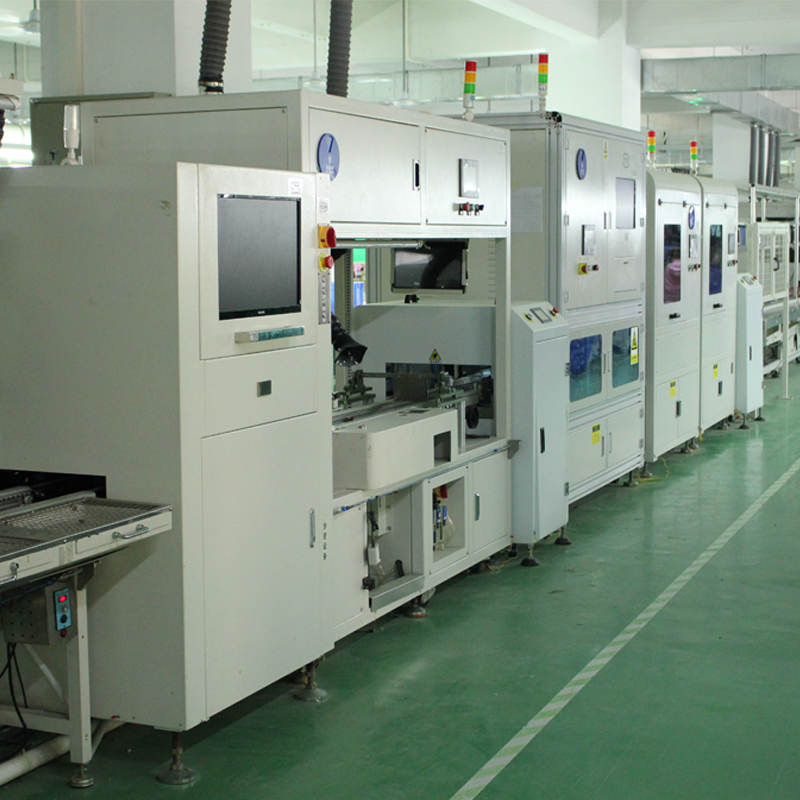
Shenzhen Simsukian Electronics Technology Co., Ltd. has been manufacturing switching power supplies and AC-DC power adapters since 1996, with more than 500 staff, ISO 9001:2015 and ISO 14001:2015 certification, and an export share of 70% across the EU, USA, Australia, Japan, Korea and the UK.
Request a 24 V sample in your plug variant, ask for a quotation based on your measured load, or download the full product catalogue: Simsukian PD Catalog (PDF). Product information is available at www.simsukianpower.com.
Have Questions or Need More Details?
Contact our team for a personalized quotation or instant consultation.
Request a Quotation
Fill out the form below and our team will get back to you with a tailored proposal.
WhatsApp Direct Chat
Prefer to chat in real-time? Message us on WhatsApp for instant assistance & quick answers.
- Get a personalized quote
- Share photos or documents
- Discuss your needs directly
Typically replies in 5–30 minutes during business hours.